The integration of generative AI into professional translation has disrupted legacy workflows, rendering both traditional human translation and unoptimized machine translation post-editing (MTPE) obsolete. As unmanaged automation monopolizes the low-end market, a new analytical framework is required for premium language providers to successfully pivot up-market. This paper introduces a conceptual model to evaluate emerging generative AI-based workflows, mapping them against defined metrics—including Total Effort, Total Quality, Efficiency Score, and the Quality Capability Index (QCI)—to identify optimized configurations across quality brackets.
The analysis reveals that best-practice Language Operations (LangOps) engineering, which produces cohesive baseline machine translations, inverts the traditional MTPE economic dynamic. While budget-tier translators yield negligible marginal utility when applied to these optimized drafts, the veteran translator emerges as an irreplaceable resource. As a result, autonomous, translator-directed Generative AI Iterative Translation (GAIT) workflows and collaborative, Language Service Provider (LSP)-directed GAIT-Augmented Machine Translation (GAMT) pipelines dominate the premium quality brackets.
This study concludes that by abandoning reactive legacy baselines in favor of proactive frameworks, boutique LSPs and veteran freelancers are uniquely positioned to form a competitive nexus, mutually securing their dominance in the highest-quality segments of the modern translation market.

Steven S. Bammel, PhD
Workflow Methodologist & Architect
1. Introduction
The translation industry operates based on an assumed tradeoff between linguistic quality and operational cost. Historically, language service providers (LSPs) have navigated this paradigm through a single framework: full human translation. Within this traditional model, quality and cost were modulated primarily by the selection of translators offering varied baskets of rates, translation quality, work skills, subject matter expertise, work habits, availability, and other relevant characteristics. Subsequently, the advent of machine translation post-editing (MTPE) introduced a secondary pathway, dividing workflows into “light” and “full” post-editing tiers as lower-cost alternatives, usually combined with translators willing to work at lower rates.
However, the rapid maturation of generative AI has upended this established market dynamic. Generative AI models are now capable of producing surprisingly high-quality, practically free machine translation that surpasses conventional neural machine translation (NMT) in most scenarios. Because consumers and other end-users can now independently satisfy many of their basic translation needs, professional providers are increasingly forced to focus their operations on the highest echelons of the quality spectrum where risk and exposure overlap.
Within this context, the conventional wisdom holds that human translation effort can simply be appended to any workflow, and that the linguist’s contribution will remain proportionally constant regardless of the underlying process. This perspective posits that the value added by a translator is dictated mainly by their relative cost, effort, and skill level, and that the resulting increase in quality scales in a simple, linear progression directly from the baseline output of the initial machine translation.
As the following workflow analysis will show, this assumption is flawed. Human post-editing is not a one-size-fits-all module that injects value at a constant rate regardless of the underlying workflow. Furthermore, generative AI possesses distinct strengths and weaknesses. While it is demonstrably superior to conventional NMT as a translation engine, its maximum efficacy is only realized within a highly structured workflow. Optimal generative AI machine translation output demands proper source text preparation and sophisticated management of curated, relevant resources within and across context windows.
To systematically harness these capabilities, we have developed a methodology of working with generative AI termed the Micro Iterative AI Frameworks, and its principles are operationalized into two related workflow architectures that enable professional translators and LSPs to deliver unprecedented value and efficiency:
- Generative AI Iterative Translation (GAIT): Designed primarily for individual professional translators, GAIT utilizes an “anchor prompt” containing all relevant instructions and resources for the translation project or sub-project at hand. It establishes a context-rich translation flow that breaks away from the restrictive, segment-by-segment paradigm of legacy tools, utilizing a continuous cycle of iterative improvement to elevate the translator’s output and efficiency. This advanced workflow produces a more accurate translation that is internally consistent, leverages relevant resources, and reads with greater stylistic fluidity.
- GAIT-Augmented MT (GAMT) and MTPE: Designed for organizational deployment by LSPs, these workflows integrate the core concepts of GAIT into a centralized operational pipeline. This allows LSPs to maintain oversight of their linguistic assets, tightly manage resources, and interchange translator talent to achieve scalable, high-quality output.
This paper examines approximately a dozen workflow variations built around these concepts, comparing them directly to common alternatives. The objective is to clearly delineate where operational effort and costs are incurred, and precisely which elements contribute to final linguistic quality most efficiently. It must be noted that, by necessity, this analysis generalizes based on a simplified, standardized workflow scenario and a narrow, static concept of quality. While real-world applications invariably introduce nuances and extraneous factors that influence cost and value equations, the theoretical principles and comparative metrics introduced herein remain valid within the constraints of these baseline assumptions.
2. Definitions and assumptions
Because real-world project variables (e.g., language pairs, domain specificity, human talent) fluctuate, this analysis relies on a thought experiment based on pre-defined definitions and assumptions for professional translation work. It excludes the consumer-level use of free online translation applications or standard chatbots, which it views as ultra-low-cost/low quality that professional workflows must now compete against in the modern era.
2.1 Metrics
The foundational metrics of this analysis isolate and measure the specific components of cost/effort and quality.
- Total Quality: Represents the comprehensive linguistic accuracy, fluency, structural integrity, internal consistency, and contextual appropriateness of the translated output. For the purposes of this analysis, Total Quality is expressed conceptually as a percentile score, with 100% being perfection in a theoretical sense. Each component in the process is assumed to contribute a certain portion to the Total Quality score.
- Total Effort/Cost: The aggregate expenditure required to execute a specific workflow and achieve the respective Total Quality. From the translator’s perspective, this measures effort; from the LSP’s perspective, it measures cost. Total Effort/Cost is standardized against a historical baseline: the effort/cost that would historically have gone into a full-human translation (Traditional Human Translation (Pre-ChatGPT) is denoted by a fixed baseline of 100 points. Rather than treating effort/cost as a monolith, it is deconstructed into three variables:
- LangOps (Language Operations): The technological, administrative, and engineering effort required before and during the automated phases (e.g., file preparation, prompt engineering, context window management, reference curation).
- Friction: The operational inefficiencies and non-value-adding burdens inherent in managing a workflow with more than one actor (e.g., project management bottlenecks, multi-step file hand-offs, miscommunications).
- Linguist: The direct cognitive, temporal, and manual labor exerted by a human professional interacting directly with the technology and the text.
To map workflows effectively to specific project requirements, this framework utilizes two complementary comparative metrics:
- Efficiency Score: A quantitative representation of operational ROI, calculated via the ratio: Efficiency Score = Total Quality / Total Effort. A higher score indicates a highly optimized workflow where resources are deployed with maximal efficiency.
- Quality Capability Index (QCI): While the Efficiency Score measures operational ROI, it does not account for the absolute quality of the output. To measure a workflow’s capability to resolve the “last mile” of linguistic errors, we utilize a logarithmic Quality Capability Index. Calculated as 10 * LOG10(Total Quality / (100 – Total Quality)), this metric rewards workflows capable of mitigating the compounding difficulty of eliminating final, stubborn errors, while preventing the values from skewing into mathematical infinity as they approach 100%.
2.2 Operational assumptions
-
Unoptimized MT and GAMT: When evaluating legacy paradigms, the model assumes a standardized level of “dis-optimization.” Unoptimized machine translation suffers from a variety of file-preparation issues, such as segmentation problems, tag soup, OCR errors, and poor translation memory (TM) and termbase (TB) leveraging. The analysis assumes a consistent prevalence of these dis-optimizing factors to contrast them against best-practice approaches (which heavily utilize LangOps to prepare files and train the MT engine). While a variety of methodologies properly optimize machine translation, this analysis specifically operationalizes the best-practice processes of GAIT and GAMT, workflows developed by the author.
-
AI Check: Several advanced workflows in this analysis incorporate an automated AI Check. In this step, the entire human or machine translated text is first processed by an automated AI evaluator configured to flag objective errors, and the translator is only assigned to review/post-edit the segments flagged by the AI.
-
Targeted bilingual review: The model assumes the AI identifies 75% of the target segments as being objectively correct, an assumption we believe to be reasonable in most scenarios with GAIT and GAMT. Consequently, the linguist is only required to perform a cognitively demanding bilingual review on the remaining 25% of flagged segments, resulting in an Effort/Cost for bilingual review of 25% of the text to be 25% of a full post-editing task.
-
Monolingual proofreading: For the unflagged 75%, the linguist relies on the AI’s verification and performs only a rapid, monolingual stylistic proofread to polish flow and internal consistency. This truncates standard linguist effort and mitigates error-blindness. As a result, the linguist’s Effort/Cost for monolingual review of 100% of the text is assumed to be 25% of a full post-editing task.
-
Error identification and quality boost: This model assumes that absolute linguistic perfection is an unachievable goal; neither an AI evaluator nor a human translator will identify every mistake and deliver perfection. Based on experience, we assume the AI Check successfully identifies 80% of the objective errors in a translation, which the human linguist then conclusively resolves. Because the unflagged segments are removed from the translator’s bilingual review scope, the residual 20% of objective errors inevitably slip through. However, empirical observation demonstrates that a human post-editor operating independently catches even fewer objective errors than this AI-assisted baseline. Consequently, we analytically grant the AI Check step a net 5% Total Quality improvement over standard workflows.
-
LangOps investment: While the AI Check effectively halves the linguist’s effort (25% for bilingual review and 25% for monolingual proofreading) and corresponding cost, engineering and running the automated AI Check increases the LangOps Effort/Cost by 10 points.
-
2.3 Veteran Translators versus Budget Translators
To accurately model the economic and qualitative impacts of human intervention across these workflows, we operationalize the distinction between the two primary tiers of linguistic labor available to LSPs: the Budget Translator and the Veteran Translator. Within this framework, these terms do not merely denote pricing tiers, but rather distinct capability profiles and operational utility levels.
-
Budget Translator: This profile represents entry-level or commoditized linguistic labor. The budget translator typically lacks deep domain expertise and does not possess proprietary, highly developed linguistic assets. Operationally, their skillset is optimized for reactive, segment-by-segment mechanical correction.
-
Veteran Translator: This profile represents elite, highly skilled linguistic professionals. The veteran translator possesses advanced subject matter expertise, nuanced stylistic command, and a robust repository of professionally curated reference materials. Rather than reacting mechanically to localized errors, the veteran translator applies high-order cognitive skills to ensure overarching structural cohesion, lexical variety, and precise terminological compliance.
2.4 Project specifications and environment
To establish a standardized baseline for quantifying effort, quality, and efficiency across these diverse workflows, this analysis evaluates each paradigm against a specific, prototypical translation project profile.
-
Scope and continuity: The source text consists of a single cohesive document or a thematic collection of documents centralized around a singular subject matter. To ensure stylistic consistency, structural cohesion, and cognitive continuity throughout the text, the human execution phase—whether encompassing full human translation or post-editing—is assigned to a single linguist.
-
Technological infrastructure: The operational baseline assumes the standard deployment of a computer-assisted translation (CAT) tool. This infrastructure is utilized to parse the source text into manageable segments and systematically archive the translated outputs within a translation memory (TM) and project-specific termbase (TB) for future leverage.
-
Operational agency and environment: A critical variable in workflow efficiency is the degree of environmental agency granted to the linguist. In autonomous, translator-directed workflows (such as the GAIT variations), the linguist retains complete operational sovereignty, executing the work entirely within their preferred, localized CAT tool environment. Furthermore, while the LSP-directed GAMT pipelines are inherently compatible with centralized, cloud-based localization management interfaces, they are also designed to support decentralized execution as well. This structural flexibility actively empowers veteran translators to remain within their customized local environments, thereby eliminating the operational friction typically associated with adapting to unfamiliar, agency-mandated platforms.
2.5 Workflow paradigms
To evaluate the operational spectrum of modern translation methodologies, the workflows analyzed in this study are classified into three categories.
- Legacy and unoptimized workflows: This category establishes the historical and statistical baseline for the analysis. It encompasses traditional human translation, unoptimized raw MT, and standard legacy machine translation post-editing (MTPE) frameworks. These paradigms are characterized by sequential processing, wherein machine translation (if utilized) lacks project-specific structural preparation. Consequently, human intervention within this tier is inherently reactive and mechanical, constrained to segment-by-segment remediation rather than proactive linguistic improvement.
- Individual translator workflows (the GAIT framework): These paradigms are directed entirely by the linguist utilizing the Generative AI Iterative Translation (GAIT) methodology. Ranging from a highly efficient turn-key MTPE approach to a maximalist GAIT approach, these workflows grant the expert translator complete operational sovereignty within their local environment. By training the AI to emulate the linguist’s unique stylistic voice, these models empower the veteran freelancer to increase processing speed and improve quality, thus providing a new level of productivity to defend premium market rates.
- LSP-driven workflows (the GAMT framework): This category encompasses pipelines structurally managed and engineered by the agency utilizing GAIT-Augmented Machine Translation (GAMT) best practices. Initiated and overseen by LangOps professionals, these workflows centralize project control at the agency level, focusing on proactive prompt optimization and the systematic generation of cohesive baseline texts. When fully optimized—such as in collaborative iterations involving AI Check mechanisms and veteran human oversight—this framework structurally aligns the LSP’s mandate for scalable margins and centralized quality assurance with the elite capabilities of the veteran translator.
3. Structural Taxonomy of Translation Workflows
3.1 Legacy and Unoptimized Workflows
Traditional Human Translation (pre-ChatGPT baseline)
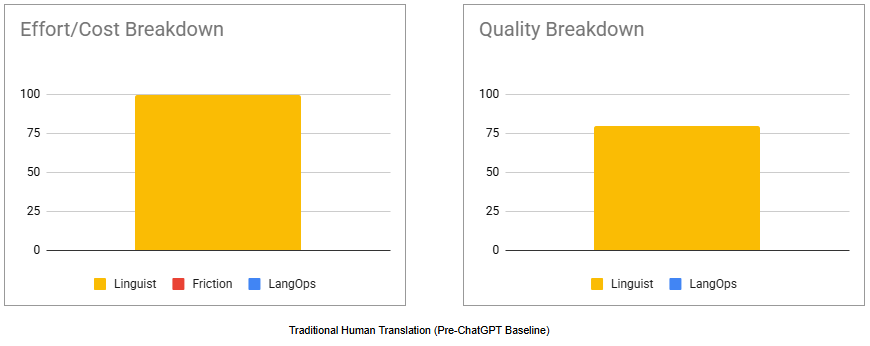
- Total Effort/Cost: 100 (LangOps: 0 | Friction: 0 | Linguist: 100)
- Total Quality: 80 (LangOps: 0 | Linguist: 80)
- Efficiency Score: 0.80
- Quality Capability Index: 6.02
Historically, the localization industry relied on a singular, foundational workflow: a translator was provided a source document and tasked with manually reproducing it in the target language. The process involved the translator reviewing the source document, making applicable notes regarding terminology and style, and then commencing the translation process. Methodologies varied by individual practitioner; some preferred to produce a rough draft prior to refinement, while others generated finished translations sequentially. While CAT tools provided TM matches and basic QA checks for spelling and grammar, the approach remained fundamentally manual.
Naturally, human translators delivered varying levels of quality, dictated by their subject matter expertise, bilingual proficiency, diligence, and available resources. For the purposes of this paper, we utilize this unaugmented linguist exertion as our standard 100-point baseline for effort, supposing an average end-point Total Quality score of 80%.
Within this paradigm, the role of a boutique LSP was primarily to assign optimal human resources and potentially arrange a secondary review step or advanced QA checks before delivery, but the LSP was not involved in the translation process itself. In a CAT tool environment, the LSP might also manage termbases and translation memories to iteratively improve end quality. However, for the constraints of this comparative analysis, such supplementary efforts are considered optional add-ons rather than components of the core human baseline. As the numbers will indicate below, relying purely on manual human translation to achieve an 80% quality threshold is inefficient in the modern era, yielding an Efficiency Score below 1.0.
Unoptimized Raw MT
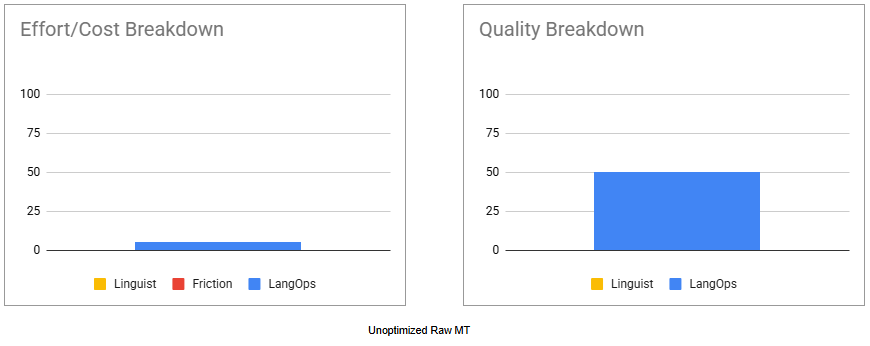
- Total Effort: 5 (LangOps: 5 | Friction: 0 | Linguist: 0)
- Total Quality: 50 (LangOps: 50 | Linguist: 0)
- Efficiency Score: 10.00
- Quality Capability Index: 0.00
While the theoretical baseline capability of raw machine translation has undeniably advanced in recent years, actualizing that potential requires rigorous, proactive LangOps intervention. Unoptimized machine translation typically stems from several compounding factors: reliance on legacy neural machine translation (NMT) engines, inadequate or nonexistent source file preparation, or a failure to implement prompting best practices when deploying generative AI models.
In this unmanaged state, the baseline output reflects unresolved mechanical vulnerabilities—such as “tag soup,” improper CAT tool segmentation, or residual OCR errors—combined with an algorithmic inability to navigate source text complexity and ambiguity. Furthermore, this lack of proactive engineering results in a failure to adhere to project specifications or leverage critical linguistic assets, including TBs and TMs. Consequently, these unresolved inputs manifest as fragmented, path-dependent translations characterized by out-of-context terminology, erratic stylistic shifts, terminology and phrasing inconsistency, direct mistranslations, and a lack of linguistic nuance.
Absent this optimization, the underlying quality defects compromise the machine translation’s suitability to deliver its full value. Therefore, a Total Quality score of 50% is estimated to accurately reflect the inherent limitations of a mismanaged workflow. While it registers a maximized Efficiency Score of 10.00—driven entirely by the total absence of human effort and post-editing costs—its Quality Capability Index (QCI) of 0.00 underscores a fundamental market reality: this paradigm is structurally incapable of scaling into a premium-quality product.
Unoptimized MT + MTPE (Budget Translator)
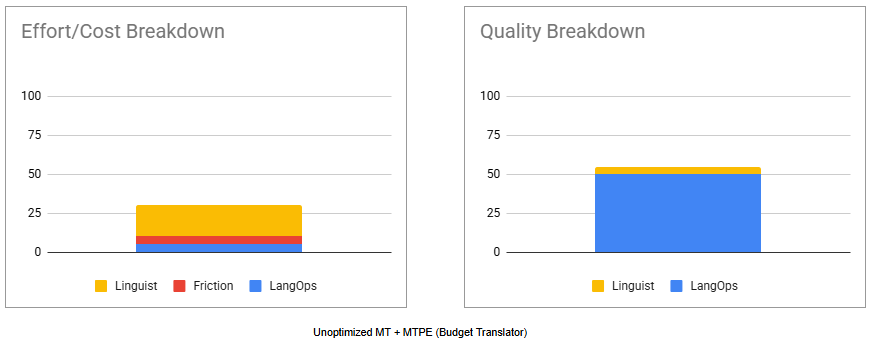
- Total Effort/Cost: 30 (LangOps: 5 | Friction: 5 | Linguist: 20)
- Total Quality: 55 (LangOps: 50 | Linguist: 5)
- Efficiency Score: 1.83
- Quality Capability Index: 0.87
When appending a standard post-editing step onto unoptimized machine translation, the entire burden of remediation is transferred directly to the human linguist. This relegates the translator to a reactionary, corrective role, forcing them to confront a chaotic baseline rather than a cohesive draft. This friction is frequently exacerbated by misaligned client expectations—namely, the assumption that a “quick clean-up” is sufficient, which subsequently drives compensation down to budget tiers.
Faced with pervasive, low-level errors, such as erratic stylistic and mechanical shifts, terminological inconsistencies, and unnatural phrasing, the linguist’s cognitive load spikes. The post-editor is induced to make many borderline, subjective micro-edits, which further obscures their visibility of deeper semantic or structural flaws. Furthermore, the very presence of the pre-generated machine translation creates a cognitive anchor; because the flawed text is already structurally occupying the segment, enacting meaningful improvements requires the translator to first mentally deconstruct the existing syntax before rebuilding it. To make matters worse, localized rewrites often clash with the surrounding, unedited machine translation, necessitating cascading rework that ultimately yields a disjointed final product.
This dynamic traps the budget-tier translator between mutually contradictory mandates: they are instructed to restrict themselves to only “necessary” corrections and avoid preferential edits, yet are simultaneously expected to elevate the text, often under a mandate to achieve “near human parity.” When combined with a high cognitive load and low compensation, the inevitable result is a tacit compromise: a cynical workflow wherein the linguist performs performative, surface-level text manipulation until they feel they have “done enough” to justify the rate.
This compromise is quietly accepted by the LSP, as it fulfills the contractual requirement to assure the end-client of human oversight (often baked into a documented ISO-type process). In many cases, this post-editing step achieves no net improvement whatsoever, rendering the final quality indistinguishable from Unoptimized Raw MT. However, for the purposes of this comparative analysis, we generously assume that this budget-tier approach reliably yields a 5% quality improvement (elevating the Total Quality score from 50% to 55%).
Unoptimized MT + MTPE (Veteran Translator)
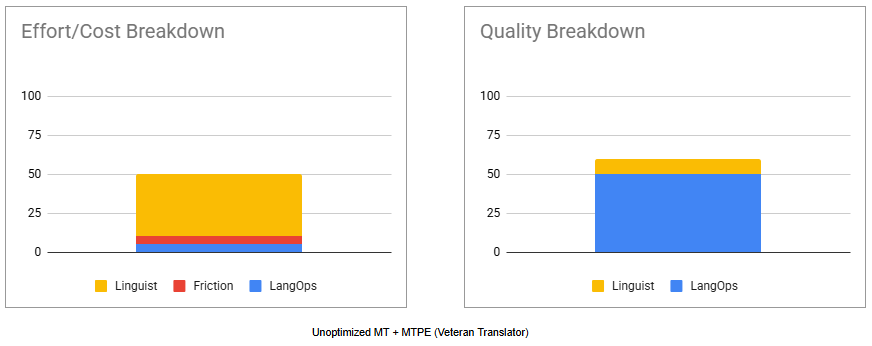
- Total Effort/Cost: 50 (LangOps: 5 | Friction: 5 | Linguist: 40)
- Total Quality: 60 (LangOps: 50 | Linguist: 10)
- Efficiency Score: 1.20
- Quality Capability Index: 1.76
Unfortunately, boosting the post-editing budget and assigning a veteran translator to post-edit unoptimized MT does not resolve the underlying deficiencies of the workflow. This is the origin of a pervasive industry complaint among translators: that MTPE frequently requires more time and effort than translating a text entirely from scratch. Much like uprooting misaligned rows in a field before planting anew, the required effort to work through the process impedes the work and yields a lower-quality final product.
While the post-editing budget is ostensibly higher in this tier than in the previous one, the compensation rate invariably remains substantially lower than that of full human translation. This reality creates a restrictive incentive structure: the translator cannot afford to simply delete the flawed MT and start over. Instead, they are financially compelled to remain within the confines of the generated text and attempt to salvage it. The primary differentiation between this workflow and its budget-tier counterpart is merely the exertion of greater effort; the constraints and contradictory mandates remain identical.
Moreover, because the remediation of unoptimized MT predominantly involves low-level mechanical fixes, veteran translators are denied the opportunity to fully utilize their advanced linguistic skills to produce work of which they can be proud, another frequent source of professional dissatisfaction with traditional MTPE. In reality, this workflow creates a profoundly negative industry dynamic: veteran translators actively avoid such assignments, experiencing tremendous discouragement as they perceive it as their only remaining option amidst falling work volumes. Concurrently, because the premium cost of utilizing a veteran translator is not justified by proportionally better outcomes, LSPs naturally default to the budget post-editing option, since the outcomes are mostly indistinguishable.
Realistically, even at a higher post-editing budget, it is unlikely that a veteran translator will be able to improve the quality by much. However, for this analysis, we assume they deliver a 10% quality improvement over the raw MT baseline.
3.2 Individual Translator Workflows
Turn-Key MTPE
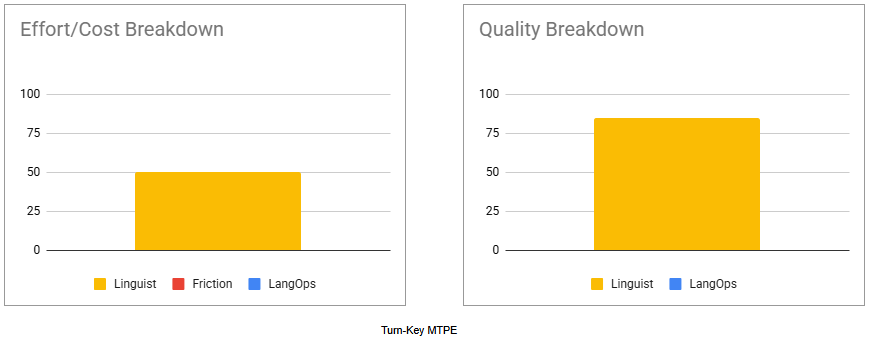
- Total Effort/Cost: 50 (LangOps: 0 | Friction: 0 | Linguist: 50)
- Total Quality: 85 (LangOps: 0 | Linguist: 85)
- Efficiency Score: 1.70
- Quality Capability Index: 7.53
As established, unoptimized machine translation severely constrains the potential of traditional post-editing. Turn-Key MTPE is a translator-directed solution born from the operational reality that generating a customized, AI-assisted translation from scratch is both faster and yields superior quality compared to salvaging flawed, unoptimized machine output. By assuming control of the entire process, the individual translator absorbs the LangOps responsibilities, thereby eliminating the friction inherent in a disjointed, multi-actor pipeline.
Essentially, this workflow functions as a streamlined application of the Generative AI Iterative Translation (GAIT) methodology. The linguist leverages generative AI to produce the initial draft, but deliberately restricts their effort regarding extensive file preparation, iterative prompting depth, and manual polishing. The objective is to double processing speed and halve overall effort, creating a highly cost-competitive, end-to-end solution. Through these efficiency gains, the translator delivers a substantially higher-quality final product than the Unoptimized MT + MTPE (Veteran Translator) model, while maintaining the exact same Total Effort/Cost.
Operationally, this workflow requires the LSP to grant the translator offline or local access to the project files—a prerequisite for deploying the GAIT methodology. Consequently, it is incompatible with rigid, online MTPE workflows where agencies centrally lock the translation within closed, segment-by-segment cloud environments. However, this approach perfectly aligns with the model of most boutique LSPs. These agencies typically forego expensive, restrictive infrastructures in favor of agility and relationship-building, delegating the core linguistic execution to trusted veteran translators.
It must be noted that within the current industry landscape, client requests for “MTPE” are frequently just veiled demands for a half-price translation. By maintaining autonomous control over the workflow, veteran translators can accommodate these pricing pressures without sacrificing their effective hourly earning rate. They deliver the discounted product the market demands, yet still achieve an 85% Total Quality score—actually surpassing the traditional full-human baseline of 80%—all at half the historical effort. For linguists willing to adapt to these technological shifts, this represents a profoundly competitive and economically sustainable strategy.
Turn-Key MTPE + AI Check
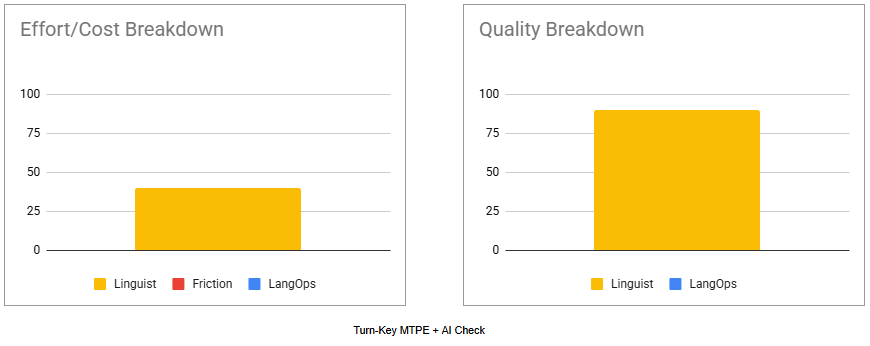
- Total Effort/Cost: 40 (LangOps: 0 | Friction: 0 | Linguist: 40)
- Total Quality: 90 (LangOps: 0 | Linguist: 90)
- Efficiency Score: 2.25
- Quality Capability Index: 9.54
By integrating an automated AI Check into a Turn-Key MTPE project, the linguist can simultaneously reduce their cognitive exertion and elevate the final quality of the output. Because the initial translation is executed within the GAIT framework, the baseline already demonstrates high structural fidelity, stylistic consistency, and terminological compliance. Consequently, the AI Check flags the majority of errors requiring human intervention. However, the foundational premise of this workflow is that the translator foregoes a comprehensive bilingual review on approximately 75% of the machine-translated text which the AI evaluates as correct.
While the model indicates that this AI-augmented process yields a superior final outcome compared to a purely manual review, the statistical reality remains that a fraction of errors will inevitably bypass the system. Naturally, human fallibility dictates that some errors would also slip through even if the translator reviewed every single segment. However, if a client expects a complete human pass over the entire text, this workflow introduces an operational and ethical dilemma. Historically, if a linguist claimed to have reviewed every segment, any residual errors could be attributed to simple human oversight, granting the translator a degree of “plausible deniability” (e.g., “I’m so sorry. I can’t believe I missed that. I’ll try to do better next time”). On the other hand, deploying an AI Check workflow as prescribed in this model requires a conscious decision to accept a predetermined margin of error in exchange for quality and efficiency gains.
This tradeoff, however, presents a liability challenge: who assumes responsibility for the errors the AI misses and the human deliberately did not check? End-clients may struggle to understand and accept this paradigm, leading to tacit agreements that are only acknowledged in the breach. When isolated errors are inevitably discovered, a defense based on statistical efficacy (“The AI is imperfect, but a 90% overall quality score is excellent”) may not persuade an uninformed or unhappy client. Therefore, while securing explicit consent upfront for this approach is difficult, failing to do so leaves the LSP and/or translator liable for the AI’s mistakes. We believe that this communication and liability dynamic represents a significant hurdle to the widespread adoption of the AI Check workflow variation, but for the purposes of this quantitative analysis, we operate under the assumption that clients have explicitly understood, quantified, and accepted this risk-reward tradeoff.
Standard GAIT
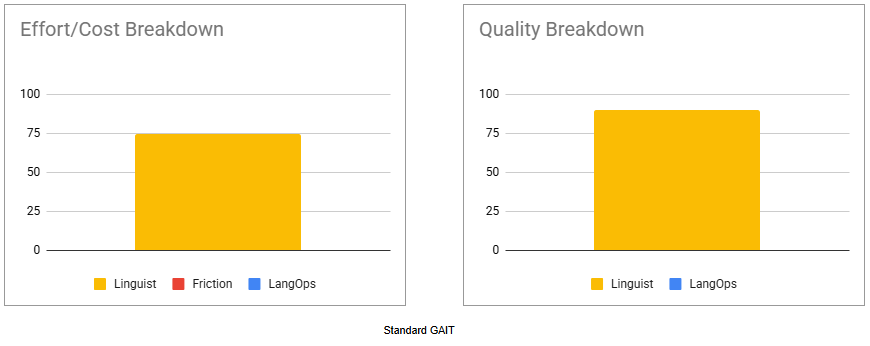
- Total Effort/Cost: 75 (LangOps: 0 | Friction: 0 | Linguist: 75)
- Total Quality: 90 (LangOps: 0 | Linguist: 90)
- Efficiency Score: 1.20
- Quality Capability Index: 9.54
As explained above, the Turn-Key MTPE workflow functions as an abbreviated version of the full Generative AI Iterative Translation (GAIT) workflow. Consequently, Standard GAIT represents the comprehensive execution of this methodology, characterized by a rigorous adherence to its best practices. While efficiency gains naturally fluctuate depending on project specifications and translator implementation, experience demonstrates that this framework can consistently yield approximately a 25% speed boost compared to the historical baseline (reducing the traditional 100-point Linguist Effort/Cost to approximately 75 points).
In addition, the final output quality surpasses the Traditional Human Translation baseline thanks to three primary structural advantages. First, the GAIT methodology trains the AI to emulate the individual translator’s unique voice. However, the AI’s inherent linguistic model still permeates the output, injecting a degree of lexical variety that compensates for stylistic stagnation or “lexical narrowness” the human translator might inadvertently possess. Second, the AI’s first draft is clean; typographical errors are virtually nonexistent in the machine’s output and are typically only introduced by the translator during the manual revision phase. Because the optimized GAIT output necessitates significantly fewer structural edits to begin with, the risk of introducing these errors is reduced. Third, generative AI models demonstrate exceptional proficiency with technical terminology. This improves the accuracy and readability of translations performed by linguists who may be operating slightly outside their primary domain of subject matter expertise.
For these reasons, a linguist rigorously applying the Standard GAIT workflow can consistently deliver a superior product while simultaneously reducing their overall effort.
Standard GAIT + AI Check
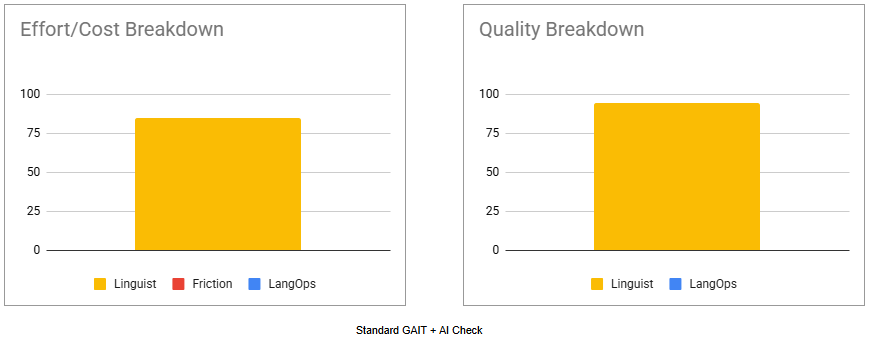
- Total Effort/Cost: 85 (LangOps: 0 | Friction: 0 | Linguist: 85)
- Total Quality: 95 (LangOps: 0 | Linguist: 95)
- Efficiency Score: 1.12
- Quality Capability Index: 12.79
Incorporating an automated AI Check into the Standard GAIT workflow yields gains proportional to those observed with Turn-Key MTPE, but with a key distinction. Rather than deploying the AI Check as a substitute for comprehensive human review (wherein the linguist skips unflagged segments), this variation utilizes the AI purely as a final, supplementary QA layer. The translator executes the full range of GAIT best practices—including a complete human review—and subsequently runs the AI Check as a last step to identify and resolve overlooked issues.
It is critical to understand why the AI Check cannot be utilized to bypass 75% of the human revision in this tier. While Turn-Key MTPE consciously accepts a marginal loss of stylistic detail to maximize speed, Standard GAIT prioritizes nuance, lexical variety, internal consistency, and correctness. Current automated AI evaluators are relatively competent at identifying objective errors, but they fall short when tasked with stylistic or subjective critique. Empirical testing reveals that relying on AI for stylistic feedback introduces excessive cognitive overhead; an LLM will often flag subjective issues erratically (e.g., identifying a nuanced terminology choice only half the time) while simultaneously generating a chaotic array of suggestions. Because the AI cannot be relied upon for consistent subjective oversight, a human linguist cannot simply accept a localized stylistic suggestion without carefully considering the nuances and reviewing the rest of the document to ensure overarching cohesion.
Consequently, to achieve the nuanced flow required of this 95% premium tier, the human translator must remain cognitively engaged with the entire text from start to finish. The AI Check is used as a final safety net, rather than a replacement for human QA.
Integrating this final AI Check represents arguably the most strategic upgrade a linguist can implement after mastering the core GAIT methodology. However, because it demands additional resources, it does not reduce effort; it increases it. Therefore, deployment of the AI Check is primarily warranted for high-value, premium-tier translation projects where the budget and risk profile justify the investment.
The implications of this workflow are significant for market positioning. Under this model, the linguist is still expending 15% less effort than the Traditional Human Translation baseline (85 points versus 100), yet the Total Quality leaps from a standard 80% to an exceptional 95%. In high-stakes localization scenarios where mitigating linguistic risk is paramount, this capability serves as a powerful differentiator, empowering veteran translators to objectively defend their premium rates against downward market pressures.
Full-Effort GAIT
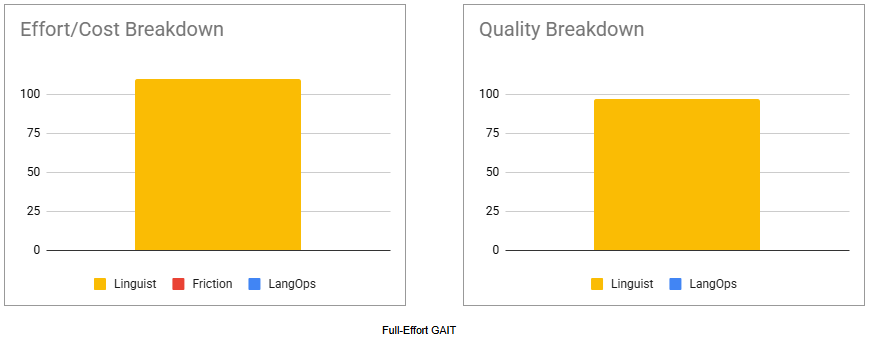
- Total Effort/Cost: 110 (LangOps: 0 | Friction: 0 | Linguist: 110)
- Total Quality: 97 (LangOps: 0 | Linguist: 97)
- Efficiency Score: 0.88
- Quality Capability Index: 15.10
This workflow variation serves as a stylized, theoretical upper bound of the translation paradigms described in this study. In this scenario, the translator executes the GAIT framework meticulously, runs the comprehensive AI Check, rigorously investigates every flagged issue, and leverages any supplementary tools or methodologies available to elevate the text. Realistically, there is no ceiling preventing Total Effort from scaling beyond the 110 points assigned here; a linguist could incorporate peer reviews, further terminological research, or client consultations to further improve quality. The defining characteristic of this tier is that the AI is no longer deployed as an engine for effort and cost savings; rather, it is exclusively relied on for quality maximization.
However, the severe onset of diminishing returns cannot be ignored in most scenarios. Regardless of the magnitude of supplementary human effort applied, the gains are inherently marginal. While further work might incrementally push the Total Quality to 98% or 99%—or, in purely theoretical terms, approach an unquantifiable 100%—the Efficiency Score drops relentlessly, reflecting the steep, compounding cost of bridging final linguistic gaps. Naturally, this maximalist expenditure of effort is economically viable only in highly leveraged, flagship-tier scenarios where the translation carries immense risk, demands absolute precision, and is supported by a budget commensurate with the intensive labor required.
3.3 LSP-Driven Workflows
Solo Raw GAMT
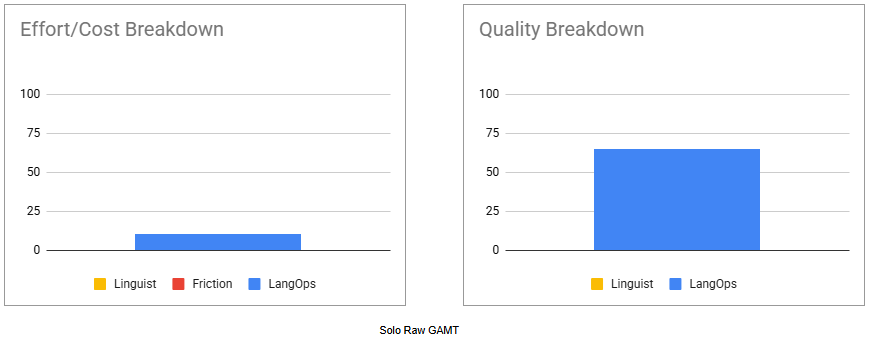
- Total Effort/Cost: 10 (LangOps: 10 | Friction: 0 | Linguist: 0)
- Total Quality: 65 (LangOps: 65 | Linguist: 0)
- Efficiency Score: 6.50
- Quality Capability Index: 2.69
Solo Raw GAMT is executed by the LangOps resources of the LSP. Even without access to human linguistic expertise, this workflow rigorously adheres to the foundational preparation phases of the GAIT-Augmented MT methodology. If high-quality linguistic assets (such as “gold standard” translation memory hits or curated glossaries) are unavailable, the LSP can still leverage the AI to develop a good anchor prompt. The text then advances through the translation and final formatting phases. The human post-editing step is explicitly bypassed, and consequently, the AI Check is also omitted (as flagging errors is operationally moot without a human linguist assigned to review them).
Because of the rigors of the engineering process, it is by no means a “plug-and-play” solution. However, this upfront investment eliminates the factors that limit unoptimized machine translation. As a result, the baseline output achieves a remarkable 65% Total Quality. This fully engineered workflow outperforms both the Budget and Veteran tiers of legacy MTPE (which max out at 55% and 60%, respectively), demonstrating that proactive optimization is superior to reactive human correction.
While this LangOps effort represents a doubled expenditure relative to Unoptimized Raw MT—and realistically, usually exceeds that in practical application because the effort/cost of Unoptimized Raw MT is often close to zero—the ROI stays high when quality is valued. This best-practice workflow not only delivers high-quality translation with low organizational friction, but it establishes a robust, pristine foundation for the collaborative workflows described below.
Collaborative Raw GAMT
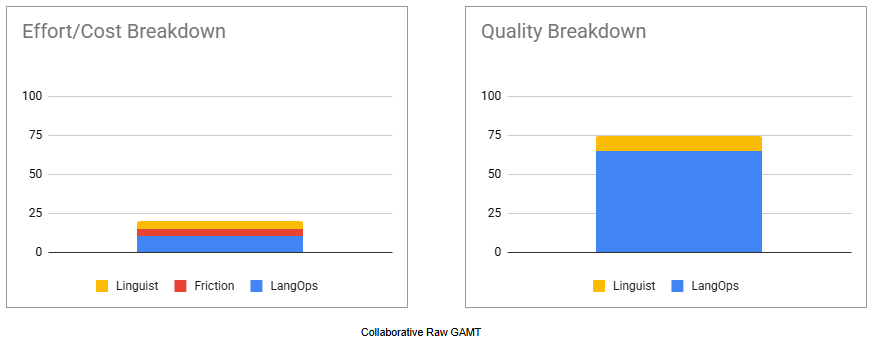
- Total Effort/Cost: 20 (LangOps: 10 | Friction: 5 | Linguist: 5)
- Total Quality: 75 (LangOps: 65 | Linguist: 10)
- Efficiency Score: 3.75
- Quality Capability Index: 4.77
To improve baseline MT without including a post-editing step, the LSP can implement targeted linguistic intervention during the preparatory phase, especially when glossaries and matches from a CAT-tool termbase or translation memory are unavailable or insufficiently optimized for the project at hand. With Collaborative Raw GAMT, a veteran translator is tasked with developing a project-specific glossary and translating a representative sample of the source text to a very high standard (potentially utilizing the Full-Effort GAIT workflow on 5–10% of the total volume).
These linguistic assets are subsequently integrated into the initial GAMT anchor prompt. The LSP then generates a raw MT sample, which is then evaluated by the translator to further identify systemic style or terminology discrepancies that can be addressed globally by iterating the anchor prompt. This means the early human insight is embedded in the AI training to improve the entire translation during the follow-up machine translation phase.
With this collaborative model, the final output is raw MT; there is no post-editing or additional QA. As a result, linguist effort is kept to just 5 points, accompanied by a 5-point friction value resulting from the multi-actor/multi-step feedback loop. But this targeted application of human expertise elevates the Total Quality to 75%, approaching the Traditional Human Translation baseline at a dramatically reduced cost. This produces an Efficiency Score of 3.75, demonstrating that human linguistic support offers an efficient way to optimize machine translation in advance.
GAMT + MTPE (Budget Translator)
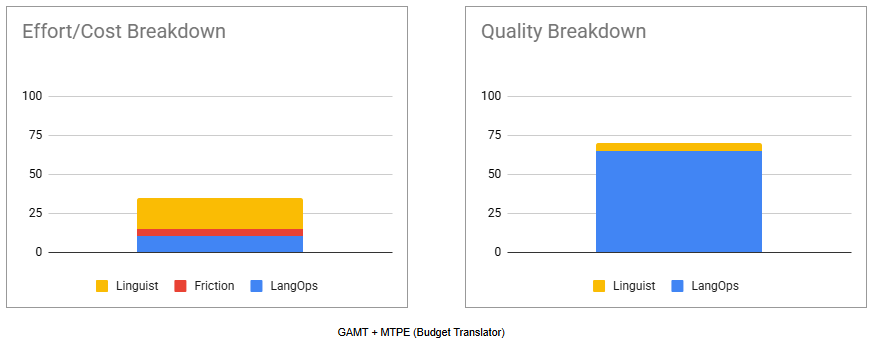
- Total Effort/Cost: 35 (LangOps: 10 | Friction: 5 | Linguist: 20)
- Total Quality: 70 (LangOps: 65 | Linguist: 5)
- Efficiency Score: 2.00
- Quality Capability Index: 3.68
Under the GAMT + MTPE (Budget Translator) workflow, the baseline machine translation quality significantly exceeds that of Unoptimized Raw MT. Relieved from remediating structural chaos, the linguist can instead target higher-order improvements. Furthermore, optional rolling feedback allows the output quality to be enhanced further during production. While minor residual errors or stylistic deviations may persist depending on project specifications and LangOps efficacy, the machine translation remains inherently cohesive rather than a disjointed patchwork.
This optimized baseline introduces an inverted dynamic regarding translator tiers when compared to legacy MTPE models. In unoptimized workflows, veteran translators are constrained by the cognitive load of low-level mechanical fixes, making budget-tier translators a more economically viable choice for basic surface-level remediation. Conversely, within the GAMT + MTPE framework, the quality of the generative output already meets or exceeds the innate capabilities of a budget-tier translator. Because the baseline quality is robust, these linguists frequently lack the advanced proficiency required not only to identify and execute meaningful textual improvements but also to constructively contribute to the iterative training process as well.
As a result, interventions by budget translators in this scenario tend to be performative rather than substantive. Edits frequently manifest as arbitrary stylistic alterations or bulk terminology replacements designed primarily to project effort, while nuanced or complex errors remain undetected. The marginal utility of assigning a budget-tier linguist to highly optimized output is low, and it is often difficult to distinguish between raw GAMT output and its budget-edited counterpart. Nevertheless, accounting for the translator’s opportunity to contribute incrementally both during the initial stages and during post-editing, this model assigns a nominal quality improvement contribution by the budget translator of 5%, elevating the Total Quality to 70%.
GAMT + MTPE (Veteran Translator)
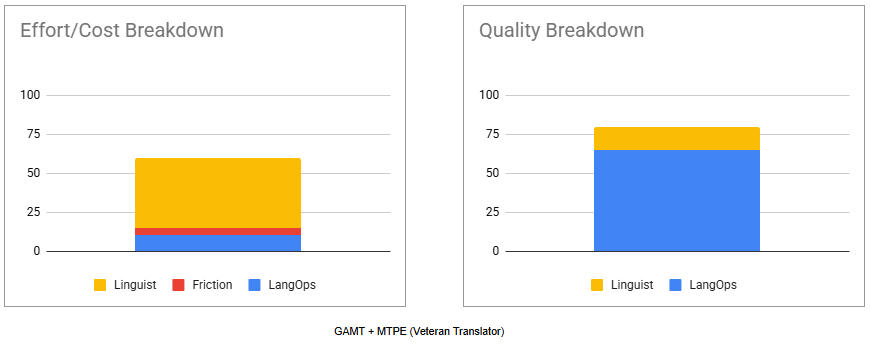
- Total Effort/Cost: 60 (LangOps: 10 | Friction: 5 | Linguist: 45)
- Total Quality: 80 (LangOps: 65 | Linguist: 15)
- Efficiency Score: 1.33
- Quality Capability Index: 6.02
The alternative to deploying a budget-tier linguist for GAMT + MTPE post-editing is engaging a veteran translator. Unlike their budget-tier counterparts, veteran translators possess the advanced linguistic proficiency necessary both to provide constructive feedback that boosts the baseline machine translation at its inception, and to substantively elevate the text during the post-editing phase. Because the generative output can be pre-optimized using the translator’s own professionally curated glossaries and “gold standard” reference texts, the baseline machine translation inherently mirrors the linguist’s preferred terminology and stylistic voice, with the option for further improvements as the project progresses. This alignment reduces the cognitive friction typically caused by confronting unfamiliar or disjointed syntax, clearing a path for the linguist to apply higher-order cognitive skills to meaningfully improve the text.
With veteran translators, we don’t start with Solo Raw GAMT like we do with budget translators. Instead, we start with Collaborative Raw GAMT, which requires an initial Effort/Cost of 5 by the linguist. The model then assumes that the veteran translator commands a post-editing compensation rate twice that of budget translators, resulting in a final linguist Effort/Cost of 45 (versus just 20 for a budget translator). At the same time, their intervention in the GAMT pipeline yields a threefold increase in quality improvement (contributing 15 points compared to the budget tier’s 5 points). By effectively elevating the final Total Quality to 80%, veteran translators establish themselves as an economically logical, premium resource. Ultimately, the GAMT + MTPE paradigm not only revitalizes the market for skilled post-editors at sustainable, respectful rates but also restores a vital sense of professional ownership and pride in the final product.
GAMT + MTPE + AI Check (Budget Translator)
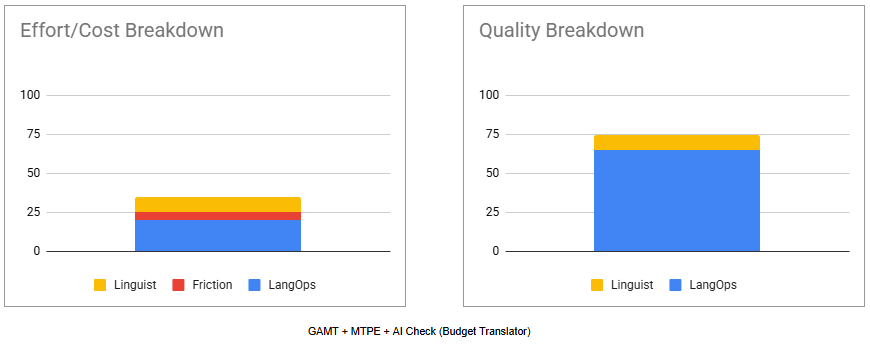
- Total Effort/Cost: 35 (LangOps: 20 | Friction: 5 | Linguist: 10)
- Total Quality: 75 (LangOps: 65 | Linguist: 10)
- Efficiency Score: 2.14
- Quality Capability Index: 4.77
The final optimization technique available under this model to enhance output quality—without increasing aggregate effort or cost, or surrendering centralized control by the LSP—is the integration of an automated AI Check. Given that budget-tier translators provide negligible marginal value during a comprehensive, segment-by-segment review of highly optimized text, the AI Check strategically guides their intervention by directing them exclusively to segments flagged as erroneous and providing targeted corrective feedback.
As established in the study’s assumptions, the supplementary LangOps cost required to engineer and run the AI Check (an increase of 10 points) directly offsets the financial savings derived from halving the budget translator’s workload (a reduction of 10 points). Consequently, the Total Effort remains static at 35 points. However, this targeted, AI-assisted methodology empowers the budget linguist to effectively resolve flagged segments without resorting to arbitrary stylistic changes. This concentrated effort generates a 10-point quality uplift, elevating the Total Quality to 75% while maintaining strict cost neutrality.
GAMT + MTPE + AI Check (Veteran Translator)
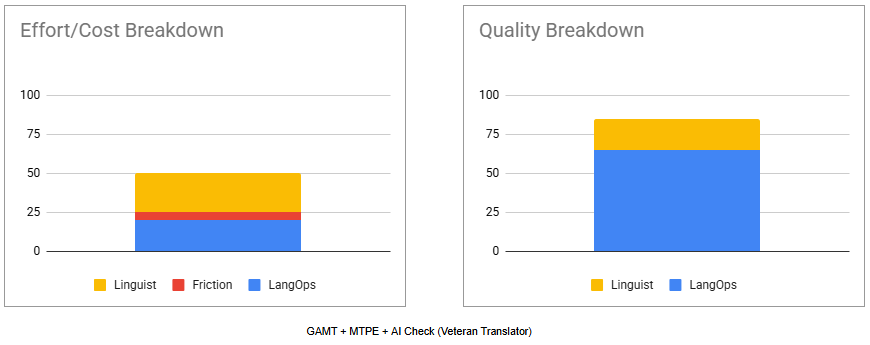
- Total Effort/Cost: 50 (LangOps: 20 | Friction: 5 | Linguist: 25)
- Total Quality: 85 (LangOps: 65 | Linguist: 20)
- Efficiency Score: 1.70
- Quality Capability Index: 7.53
The GAMT + MTPE + AI Check (Veteran Translator) workflow represents the pinnacle of LSP-directed translation workflows. By integrating proactive LangOps engineering, targeted AI-driven QA, and expert human review, this workflow drives Total Effort/Cost down to 50 while elevating Total Quality to 85%, positioning it just below the premium-priced, translator-directed Standard GAIT workflow.
Crucially, this allows the LSP to maintain centralized control over the operational environment, providing a lever to ensure consistently high quality across decentralized teams and from project to project. As previously established, the collaborative preparation of the baseline GAMT output—combined with an iterative feedback loop during post-editing—is uniquely conducive to engaging veteran translators. This aligns perfectly with the operational strengths of boutique LSPs, allowing them to actively leverage the elite human resources they have spent decades cultivating rather than replacing them.
As a direct result of the synergies between the workflow, the LSP’s LangOps effort, and the veteran translator’s skills, the linguist’s contribution to Total Quality reaches 20 points—the highest of any LSP-directed workflow evaluated in this study. Ultimately, this paradigm yields a highly competitive final product that captures substantially more margin for the LSP, which in turn supports higher, sustainable rates for veteran freelancers.
4. Interpreting the Results
4.1 Efficiency vs. Quality
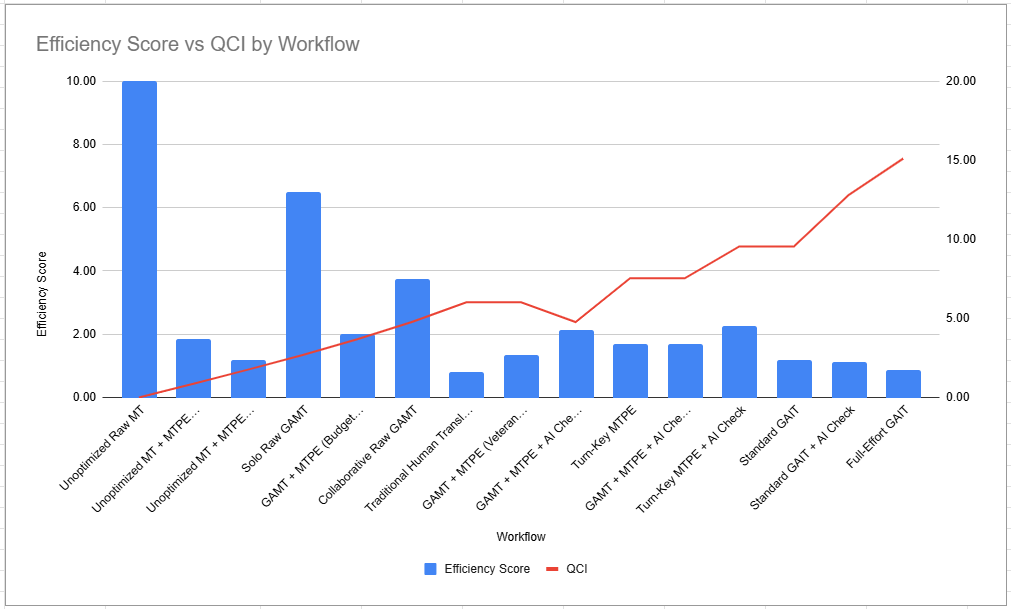
Efficiency Score vs. QCI by Workflow synthesizes the tension between cost/effort and quality across legacy and emerging translation paradigms. By plotting the Efficiency Score (blue bars, left axis) against the Quality Capability Index (red line, right axis), several stark market realities become immediately apparent.
-
Obsolescence of legacy baselines: Traditional Human Translation is no longer a competitive operational standard. Its Efficiency Score rests at the bottom, while its QCI is eclipsed by advanced workflows. Today, AI-augmented LangOps techniques combined with veteran translators consistently deliver higher quality, dramatically higher efficiency, or both. Conversely, while Unoptimized Raw MT registers a high Efficiency Score due to near-zero cost or effort, its negligible QCI confirms it is structurally incapable of producing or leading to premium quality. Consequently, unmanaged legacy pipelines are relegated to the lowest-quality market margins, a segment already heavily cannibalized by free, consumer-facing tools.
-
Empowerment of the autonomous translator: The advanced, translator-directed GAIT workflows achieve the highest QCI levels in this analysis, outperforming all LSP-directed paradigms. This dominance equips independent veteran translators with a countermeasure to market rate compression, unlocking premium quality thresholds at more competitive rates to stimulate new demand. The Turn-Key MTPE workflow enables linguists to introduce a secondary price point without capitulating to the flawed MTPE processes frequently mandated by agencies. Crucially, this autonomous methodology can often be invisibly superimposed over legacy MTPE pipelines, delivering superior value to both LSPs and end-clients without requiring them to change their centralized infrastructures. Furthermore, at the premium tier of the market, the Standard GAIT workflow—and specifically its Standard GAIT + AI Check variation—delivers a parallel breakthrough. By maximizing both efficiency and quality, it stimulates new demand for premium work that was previously considered cost prohibitive.
-
The boutique LSP and veteran translator nexus: LSP-directed workflows—specifically those within the GAMT framework—enable boutique agencies to capture and retain significantly more value from their localization pipelines, provided they leverage the appropriate talent. This study demonstrates the economic and qualitative imperative of collaborating with veteran translators over budget-tier linguists, even in post-editing scenarios. Crucially, the veteran translators boutique agencies have spent decades cultivating are simultaneously the ideal candidates for collaborative GAMT pipelines and the autonomous architects of the highest-tier GAIT workflows. Because only workflows driven by these veteran professionals can surpass the 85% Total Quality threshold, boutique LSPs must strategically anchor their business models in this premium market segment. By activating their established networks of veteran talent, forward-thinking LSPs can offer near-parity GAMT workflows in-house, while maintaining on-demand access to the autonomous GAIT resources required for parity-exceeding quality. Combined with a Collaborative Raw GAMT offering at the utility tier, boutique agencies can offer comprehensive coverage across the spectrum of demand within the translation market. Ultimately, this inextricably links the commercial success of nimble boutique LSPs to the veteran freelancers they already trust.
4.2 Selection of Optimal Workflows
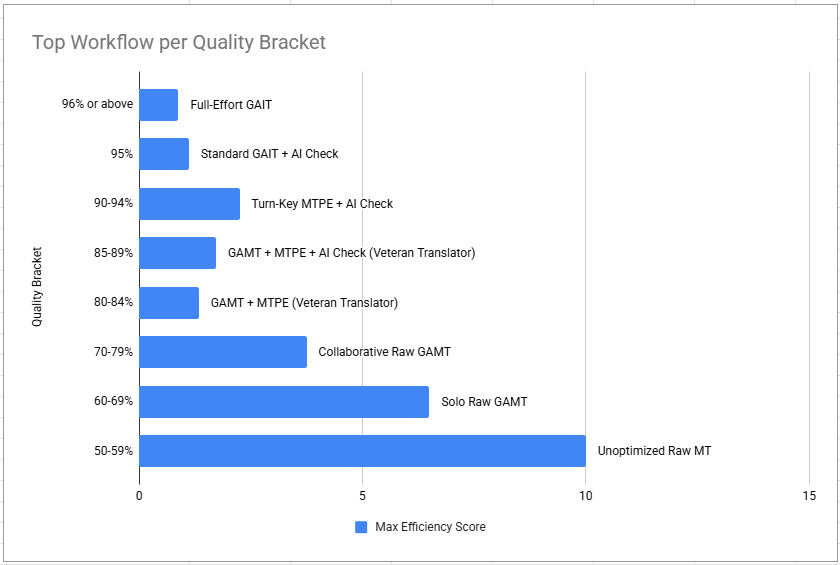
The Top Workflow per Quality Bracket graph isolates the most efficient workflow configuration for any given target quality threshold. By mapping the maximum achievable Efficiency Score against distinct quality tiers, this distribution provides a strategic roadmap for LSPs seeking to optimize their service offerings and resource allocation.
-
Superior automation: By applying the GAMT methodology, boutique LSPs can commercialize machine translation that substantially outperforms both the unoptimized raw MT generated internally by end clients and standard legacy MTPE. The Collaborative Raw GAMT workflow delivers fluent, contextually coherent utility-grade translations at remarkably affordable price points. LSPs should actively productize this tier, positioning it as a distinct, monetizable service that bridges the market gap between free automation and premium post-editing.
-
Affordable mid-to-high quality tier: For projects requiring professional-grade quality, this study demonstrates that the GAMT + MTPE + AI Check (Veteran Translator) workflow is the optimal LSP-directed paradigm up to 89%, maximizing efficiency while retaining centralized control. Alternatively, LSPs can collaborate with veteran translators operating autonomously under the Turn-Key MTPE + AI Check workflow. This enables agencies to deliver slightly superior quality at comparable aggregate costs, effectively leveraging the translator’s independent efficiency while maintaining highly competitive market pricing.
-
Premium market standard: At the apex of the market, Standard GAIT + AI Check emerges as the definitive workflow that boutique LSPs should mandate from their elite veteran linguists. Capturing the 95% quality bracket, it achieves premium, parity-exceeding translation at a reasonable expenditure of cost and effort. While Full-Effort GAIT occupies the highest conceivable tier, its severe diminishing returns on cost and effort render it economically unviable for most LSP-intermediated projects. Furthermore, end-clients rarely possess the evaluative capacity to distinguish the marginal qualitative difference at this level anyway.
-
Exception for maximum leverage: While Full-Effort GAIT is generally economically unviable for entire projects, a notable exception exists. This maximum-effort approach may be justified during the upfront, preparatory phase of the GAMT + MTPE + AI Check (Veteran Translator) workflow. Tasking a veteran translator to expend intensive effort on a small, representative “gold standard” sample text to perfectly calibrate the anchor prompt creates operational leverage, particularly on large-scale projects. Because this high-cost intervention is strictly confined to a fraction of the total word count, the upfront expenditure is amortized by the compounding quality improvements it cascades across the entire project corpus.
5. Conclusions
The shift from sequential, string-based processing to context-driven generative AI pipelines necessitates a fundamental re-evaluation of industry workflows. As demonstrated by the operational and mathematical framework evaluated in this study, the traditional dichotomy between unoptimized machine translation and legacy human translation has been rendered functionally obsolete. In its place, a multi-tiered service offering powered by LangOps engineering and Generative AI-driven translation (GAMT/GAIT) offers higher scalability, efficiency, and quality.
-
There’s no turning back: Traditional Human Translation and Unoptimized MTPE no longer present viable economic or qualitative paths forward for professional translation providers. Unmanaged automation has dropped to the low-quality margins of the market, a segment increasingly cannibalized by free, consumer-facing tools. Conversely, proactive optimization establishes sophisticated, cohesive utility-grade baselines that outperform legacy post-editing frameworks at a fraction of the historical cost.
-
The veteran translator is not out of the game: The transition to generative AI-driven translation does not diminish top human expertise; it establishes it as an irreplaceable resource for value creation across the entire quality spectrum. The independent veteran translator remains the singular resource capable of executing the autonomous GAIT workflows that deliver the market’s absolute highest quality, such as Standard GAIT + AI Check. Furthermore, this talent is equally indispensable across LSP-led pipelines. Even at the baseline utility tier, the veteran is the secret behind the Collaborative Raw GAMT workflow, providing the essential linguistic assets and consulting required to build an optimized baseline.
-
Boutique LSPs and veteran translators need each other. At the top of the market, a powerful competitive nexus emerges between boutique LSPs and the veteran talent they have historically cultivated. Because the top tier of LSP-driven quality is dominated by the collaborative GAMT + MTPE + AI Check (Veteran Translator) workflow and the autonomous, translator-directed models, the commercial interests of agencies and expert freelancers are fundamentally aligned. LSPs can confidently productize in-house generative workflows while maintaining direct, on-demand access to the human resources capable of delivering parity-exceeding quality when critical project specifications demand it.
Ultimately, navigating the modern translation landscape requires abandoning reactive, segment-by-segment human remediation in favor of proactive optimization and leveraged linguistic engineering. By mapping specific target quality brackets to their optimized workflow equivalents, boutique LSPs and veteran translators can mutually secure their positioning at every service tier within the high-end translation market.
Ready to access your own language workflow back office?
Scale faster with human-directed AI translation, MTPE, and outsourced workflow support.
My On-Call Language Workflow Back Office gives you a plug-and-play production process built around trained, context-aware AI and human expertise. Leapfrog the difficult up-front work, take on more projects from a position of strength, and retain full ownership of your data and language assets. If you later bring work in-house, the workflows and resources remain yours, and I remain available as your safety net when capacity, complexity, or deadlines demand extra support.